Monday, July 06, 2015

US Elections an Opportunity to Save Bangladesh's Hindus

I can remember talking with a US lawmaker and staff about the ethnic cleansing of Bangladesh's Hindus.  At one point, the staff person asked, "If this is such a big problem that we have to do something, why haven't we heard much from American Hindus?"  They had to attend to the needs of many constituencies, and ignoring those needs to focus on something not significant to the actual community involved did not seem right.  Since then, some US Hindus have made some noise, but it has been rather tepid at best.  Two pieces of evidence:
  • On April 30, 2015, the US House Committee on Foreign Affairs held hearings about the deteriorating situation in Bangladesh, but it did not recommend action and only slightly addressed the plight of Hindus and the danger it means for all of us.
  • Prior to its last visit to Bangladesh, the US Commission on International Religious Freedom asked for contacts who would confirm the persecution of Hindus and government complicity there, but it ignored the evidence it received in its report.
With US elections coming in 2016, however, Hindus and other have a chance to do something real about it.  Several presidential hopefuls can make this an issue.  Florida Senator Marco Rubio's staff, for instance, has been working with me and gathering evidence.  Florida Senator Jeb Bush once me with Bangladeshi officials.  And President Barack Obama once derisively called former Secretary of State Hillary Clinton "the Senator from Punjab" because of Clinton ties with India.  There are tight and not so tight races nationwide for Senator and Member of Congress, many in districts and states with significant Hindu populations.  But the impact will be there only if we press our case.  And it becomes even stronger if Hindus align with other religious groups, as we have been doing with Jews and Hindus in the Chicago area.

I urge everyone who believes we have to seize these opportunities to contact me through this blog, my web site, facebook, or tumblr account (the latter is under the name bdhindus); or email me at drrbenkin@comcast.net.

We CAN do something to save millions of innocents--or we can let the moment pass and see them destroyed.

Labels: , , , , , ,

Thursday, April 02, 2015

Bangladesh Official dismisses crimes with anti-Semitic remark

On March 10, 2015, human rights activist and attorney Rabindra Ghosh met with H. T. Imam, Awami League Advisory Council member and one of Prime Minister Sheikh Hasina's closest advisers.  He met him to address Bangladesh's ongoing ethnic cleansing of Hindus in Bangladesh.  It is an issue I addressed with Imam four years earlier in Dhaka.  As he did when I met with him, Imam rejected any suggestion that Hindus face persecution under the Awami League government.  When Ghosh raised my name and my eight year activism on the issue, Imam dismissed the notion that any of it could be correct, instead responding that “Dr. Benkin is working for the interests of the Jews.”

Is he serious?  Does he expect a man of Rabindra Ghosh’s stature—or other world leaders and captains of industry—to have any regard for a government whose Prime Minister gives credence to a man who thinks like that?   The short answer is that he does because Imam and other Bangladeshi officials have used that and other sorts of nonsense to try and cover up their horrendous treatment of Hindus.  You see, it's more important to Bangladeshi leaders that people continue buying their falsehoods about being a "moderate" country.  No amount of blustering and misdirection, however, can hide their crimes.  With each day, their atrocities against Hindus become known to more and more people.  I've also documented them in my book, A Quiet Case of Ethnic Cleansing: the Murder of Bangladesh's Hindus.

But there is more significance to Awami League anti-Semitism.  For while the Bangladeshi government is complicity in anti-Hindu atrocities and guilty of selling its soul to protect its export markets (which are dependent on their false image as moderate); the people of Bangladesh are not.  It takes a lot of care and time for non-Bengalis to understand how to interpret the actions and words of Bengalis, and I have been fortunate enough to spend a lot of quality time in Bengal (both Indian and Bangladeshi) and with Bengalis.  When I travel throughout Bengal to stop the atrocities against Bengali Hindus, I am accompanied almost invariably by Muslims and Hindus.  The reaction I have received from Bangladeshi Muslims to HT Imam's slanderous remark has been one of support and understanding.  They have without exception rejected Imam's comment as an attempt to avoid dealing with the persecution of Bangladesh's Hindus.

As I have written before, this is not a war between Hindus and Muslims but one between decent people and those who have no decency.  Personally, I want Sheikh Hasina to sack HT Imam and stop discrediting herself by associating her name with his.  That, however, will not end the problem.  My greater wish is for Hindus and Muslims to recognize what Bangladesh is and what it can be; and with the help of other nations, together move that country to a new future.

Labels: , , , , , , , , ,

Friday, November 01, 2013

Progress in the Fight to Save Bangladesh's Hindus

As Bangladesh slips further into anarchy, approaching its first scheduled elections since changing the constitutional process for them; we are seeing both increased violence against Hindus in Bangladesh, allowed to continue with impunity by Sheikh Hasina and her Awami League government; and progress in the fight to stop the ethnic cleansing of Hindus from the United States.

People do bad things--and especially gross human rights violations--because they believe that no one will notice or even care.  This is what has enabled successive Bangladesh governments to allow their Hindus citizens to be brutalized with impunity.  That is changing, however, and promises to hit the Bangladeshis where they can least afford it if they do not put an end to this "Quiet Case of Ethnic Cleansing."

Bangladesh's ability to attract international donations, provide UN peacekeeping troop, and sell its garments on the international market depend on the continued belief that Bangladesh is a moderate nation that does not persecute its minorities--both of which are contrary to the facts.  Now, from the United States, a major player for all of those goodies, comes the following over the past several months:

  • Staff for two Congressmen--one Democrat, one Republican--approached the US Commission on International Religious Freedom (USCIRF) about focusing on the ethnic cleansing of Hindus when making its determination.  USCIRF agreed, and I am working on follow up.
  • The US House Foreign Affairs Committee is looking seriously into the ethnic cleansing of Hindus in Bangladesh and working with me on it.
  • The Chicago suburb of Mount Prospect recently became the first US locality to formally recognize the ethnic cleansing of Hindus in Bangladesh.  More such proclamations are expected from other localities.
  • Two major US organizations dedicated to the fight against genocide and associated with no political causes, are now looking closely into the ethnic cleansing of Hindus in Bangladesh.
The European Parliament, representing another major force on which Bangladesh depends, is currently considering an extensive report about that nation's complicity in the persecution of its Hindu citizens.

If Bangladesh officials continue to think that people will accept their blanket and disingenuous denials of responsibility, they are mistaken.  Already, questions are arising about how donations, peacekeeping receipts, and the purchase of Bangladeshi goods support the ethnic cleansing of Hindus.

Those questions are only getting louder.

Labels: , , , , , , , , ,

Sunday, March 31, 2013

The Real War in South Asia


Trained as a social scientist, I learned that if a factor appears in event after event, ignoring it is intellectually dishonest and ineffective analysis.  As recent terror blasts in the South Indian city of Hyderabad remind us, Islam is terrorism’s repeating factor; and no one has yet to explain effectively why it would not be dishonest to summarily dismiss it as one.  Moreover, the refusal of Muslim leaders lay and clerical to act assiduously against those who commit terror in their name is troubling, to say the least.  It should be inconceivable that we live in a world where a group calling itself Indian Mujahadeen sets off terrorist bombs in a crowded Indian market, and stuffs them with nails to create the maximum amount of human suffering; and every single Muslim in South Asia is not hunting down the terrorists.  But we do.  And the rest of the world is not calling them on it, which is our part of the problem.

Yet, having just returned from Bangladesh where Islamists and their appeasers are eliminating its Hindu population, I can say that on the ground this is not a war between Hindus and Muslims but one between decent people and people who have no decency regardless of religion.

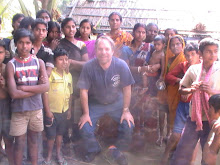
In the far northern district of Dinajpur, I recently visited a remote village of 85 Hindu families, cut off from the rest of Bangladesh in almost every way:  no electricity, bad roads, not even a signal for my cell phone.  Some time before our visit, more than 100 marauding Muslims attacked the village; moving from home to home, taking some possessions and destroying the rest; from farm to farm stealing livestock and destroying crops.  They torched the homes burning many to the ground; and they abused many of the women (an all-too-common feature of these attacks).  By the time human rights attorney Rabindra Ghosh and I arrived, the villagers had largely rebuilt, but charred remnants were there, too.  More chilling, the attackers are threatening to return and finish the job if the people do not leave Bangladesh.

Those attackers have no decency; and neither do the Bangladeshi officials, local and national, who refuse to help the victims or prosecute the attackers and are thereby complicit in the terror.  Right now, the only thing that stands in their way is four local Muslim policemen.  They told us that prior to the attacks, no one ever came to the village but that since then, they get there as frequently as possible, often multiple times daily, to let the villagers’ tormenters know that they will have to get through them if they want to renew the attacks.  (Villagers confirmed this.)  They are doing this largely on their own since, as they admit, the government is taking no action.  They fear for the villagers, however, because they know they cannot be there all the time.

In a country where decisions by public servants are based on how much money they get for it, these Muslim policemen represent the apogee of decency.

On the other hand, two Hindu Members of Parliament (MPs) visited me, and I asked them why neither they nor their 15 colleagues (by their count) have done a thing to save their co-religionists or even raised their voice against it.  I indicated Bangladeshi human rights lawyer and tireless activist, Rabindra Ghosh, beside me and said he could provide them with a fresh atrocity that they can read into the record at every session of the Jatiya Sangsad.  They could protest the non-repeal of the Vested Property Act and introduce bills to rescind this economic engine of ethnic cleansing until it is.  I pointed out that 17 MPs is a large bloc, and that the only thing preventing them from acting was their personal greed and moral cowardice.

They are not decent people, but the many young Bangladeshis I met—both Hindu and Muslim—who are trying to fight for the safety of Hindus are.  For their service to their country, the Bangladeshi police and government—who are not decent—rewarded them with beatings and arrests.

Then there is Bangladesh’s Home Minister, Muhiuddin Khan Alamgir, particularly indecent because he is able to do something to stop the atrocities but refuses to do so.  On February 20, he and I had a rather acrimonious argument when he insisted that the government was doing just fine, thank you, in preventing attacks on Hindus.  I wondered how the people I met in that Dinajpur village would have responded.  His most insistent reply was that he “saw the enclaves of the Red Indians” in the United States and that “33 people were killed in Connecticut.” He also “countered” with “union membership has declined in the United States.”  Whether he really thought they have any relation to their government-aided ethnic cleansing of Hindus in Bangladesh, or he was being cynical; the man has no decency.  Finally, he did ask me to provide him with evidence of any atrocities and he would have them investigated; but I asked him if he did not find it odd that he, the nation’s Home Minister sitting in its capital, was dependent on “some guy from Chicago” for information about events in Bangladesh.

Perhaps, however, the most indecent parties of all are the internationally referenced and well-funded  groups that claim the mantle of human rights defenders but who have actively ignored what has become an open secret in South Asia.  In its 2012 “Human Rights Report” on Bangladesh, Amnesty International did not even mention oppression of Hindus.  It claimed to have visited Bangladesh three times that year but could not find a trace of what has become an open secret that has been well-documented by organizations like the Hindu American Foundation, Global Human Rights Defence, and Bangladesh Minority Watch for years.

Amnesty International; Human Rights Watch; the UN with its misnomered human rights commission; the finger-wagging European Union, CNN, Reuters, the BBC, New York Times, Times of India, Times of London, the left-wing media, the right-wing media, and pretty much every other major “media”:  indecent for their willful ignorance of the ethnic cleansing of Hindus in Bangladesh and of those Islamists and appeasers that are guilty of doing it.

So let’s add it up.  Muslim police, Muslim and Hindu youth activists, activists like Rabindra Ghosh; decent.  Hindu MPs, Muslim attackers, Muslim cleric and political leaders, big name human rights organizations and media, and the Bangladeshi Home Minister; indecent.  The ledger seems tilted against decency right now, and it seems the only hope Bangladesh’s Hindus have is for decent people to change that.

Labels: , , , , , , , , , ,

Friday, March 01, 2013

Bangladesh Fine with Hindus' Destruction

On February 20, 2013, I met with Bangladesh Home Minister Muhiuddin Khan Alamgir in his Dhaka office.  Having just returned from Dinajpur where I witnessed irrefutable evidence of Hindus' ethnic cleansing and government complicity, I wished to deliver a simple message.  Bangladesh has been able to get away with empty promises regarding the process that has reduced Hindus from a fifth of the population to just over seven percent, but that time is drawing to an end.  Bangladesh can either get on top of the process by taking certain concrete steps and help manage it; or it can be the recipient of whatever might come as a result of their inaction.

While some Bangladeshi officials have at least acknowledged the problem, this individual was having none of it.  He was adamant that his government was doing just fine, thank you very much, and it had no intention of doing anything more with regard to this human rights travesty.  In fact, his responses did not attempt to show how it was indeed not a problem and that Hindus in Bangladesh are just fine, but they took the form of accusations:  "I have seen the enclaves of the Red Indians," "33 people were killed in Connecticut," and "union membership has declined in the United States," which I pointed out, if I can take him at his word, indicate the depth of the problem they have.

It is an unfortunate fact that minorities are attacked pretty much everywhere.  The only reason for outsiders like me to get involved is when the insiders refuse to respond and send a message that such things are okay with them--the same message the Home Minister and early their US Ambassador sent.  I suggested that the Home Minister travel to Dinajpur where Bangladeshi human rights activist Rabindra Ghosh and I saw a village of frightened Hindus who were attacked by a group of marauding Muslims who went from home to home stealing what they wanted and destroying the rest, and from farm to farm destroying crops and stealing livestock.  The government refused to take any action and the area's MP is involved in grabbing the Hindu land; and the attackers keep threatening to return and "finish the job" if the Hindus do not leave Bangladesh.  The only thing preventing them from now is four Muslim policemen who go to the village on their own.

But the Home Minister just said that if there are atrocities, I should send him the evidence and he would investigate.  Besides the fact that this would do nothing in time for these villagers, I asked:  "Doesn't it seem odd that you, the Home Minister sitting in the nation's capital, are dependent on some guy from Chicago for evidence of such crimes?"  I also told him that such things should be handled at the local level by local officials and should not require an "investigation" by the Home Minister.

Yet, he remained adamant that they would not change anything--even the blatantly anti-Hindu laws that his government promised to repeal, had a chance to repeal, but did not.  That is, he was adamant until I suggested that such obstinacy could lead to a situation where they might find it difficult to sell their garments on the open market; at which point he pleaded poverty that fixing the problem would take money and that such sanctions would deprive them of it.

Stay tuned because leaders in at least two foreign capitals have been filled in on our encounter, presented with the damning evidence against Bangladesh, and are seriously contemplating action.

Labels: , , , , , , , , ,

Wednesday, January 02, 2013

Ignorance is not Bliss

Perhaps because I maintain close track of events in South Asia, I am constantly amazed at how little most Americans know about events there.  Moreover, it is clear that India will likely to become one of the US's most important allies--if we proceed appropriately--and that South Asia is the really critical battleground between freedom and Islamist totalitarianism.

To be sure, we in the West are blissfully ignorant of perhaps the largest case of ethnic cleansing in modern times:  the elimination of Hindus in Bangladesh, who even after being driven from almost a third of the population to under eight percent, still number around 15 million souls--15 million souls at risk and facing brutalization every day.   This quiet case of ethnic cleansing, as I have dubbed it, is now spilling into India, particularly in West Bengal and the Northeast where radicals and appeasers now seem to hold sway.

A small number of Americans know a little about mass murders in Bangladesh during its 1971 revolution by Pakistani troops and local collaborators--around two to three million; and a smaller number will avidly point to the current Bangladeshi government's prosecution of those decades old crimes.  That might be true--and it comports with the ruling party's ideology--but almost none of my fellow Americans know that those prosecutions cover only the highest profile offenses, and specifically ignore some of the most egregious examples of anti-Hindu activity.  According to Rabindra Ghosh of Bangladesh Minority Watch and a tireless foe of government-enabled ethnic cleansing in his country, 22 Hindus were killed for their faith at Motbaria Upazilla of the Perojpur District of Bangladesh in 1971; and due in part to pressure by a Member of Parliament, not a single charge has ever been filed in the case.  Several newspapers have highlighted the murders and lack of prosecution, but no Bangladeshi government has ever taken action.  As a result of his activism, Advocate Ghosh and his family have been attacked by radicals with impunity.

In December, Indians were horrified at the gang rape-torture of a 23-year-old student on a public bus in Delhi.  The nation was agonizing over the incident as the young woman clung to her life.  When she lost that battle some days later, the reaction from Indians regardless of party or ideology was one of shock and anger.  They demanded that the perpetrators be brought to justice and that the country seriously examine why India has been ranked as "the worst nation to be female" among the G20 countries.  The intense pain and serious re-consideration has the potential to re-set gender roles in an area of the world where such change lags seriously behind much of the globe.  But it remains to be seen if those who claim the mantle of women's rights have even taken notice, let alone offer help in what could be a real watershed in gender equality.

Is it political alliances, ignorance, or a bias that considers victims worthy only if they have been defined so?  No matter, as far as most westerners are concerned, the brutalization of Hindus can proceed apace--even while strengthening our most inveterate enemies, as can the brutalization of women.

Labels: , , , , , , , ,

Thursday, November 08, 2012

The Way Forward

Election Night 2012 saw a number of our friends and human rights allies go down to defeat.  The most significant loss was that of Illinois Congressman Robert Dold--a man whom I consider a friend; a good man; and someone whose defeat is more of a loss for the country than it is a loss for just one man.  Of whatever disappointments I had that night, Bob Dold's defeat was the one about which I am truly and personally sad.

Having said that, we must understand that while I have my own personal values and beliefs, politics is ultimately a means through which we achieve our human rights goal.  And in that respect, we retain many friends in Washington who are committed to helping us save the 15 million Hindus in Bangladesh.  We might have gained new ones, as well.  The election results--and especially Bob's loss--mean that the way forward is not as straight or direct; but it is still before us, and we will seize the opportunities that 2013 offers us.

For several years now, I have been collecting evidence of the atrocities committed against Hindus in Bangladesh and of the Bangladeshi government's complicity in them.  That complicity runs the gamut from actual participation in the atrocities and their coverup by members of the government, to the government's tacit approval of them through its refusal to prosecute.  Much of that evidence is presented in my book A Quiet Case of Ethnic Cleansing: The Murder of Bangladesh's Hindus.

Since its publication, however, I have gathered verified and verifiable evidence that the atrocities continue, as does Bangladesh's Awami League government's complicity.  I have obtained some of the evidence first-hand and some of it through human rights activists like Rabindra Ghosh.  (When the history of this terrible atrocity is written, including how it was stopped, the name of Rabindra Ghosh will be recognized as that of a true and self-less hero.  I am honored to call him a friend and colleague.)

Gathering and verifying that evidence--accumulating so much that the world can no longer remain silent and inert--and presenting it to organizations and individuals who can act is our sole focus and a goal I know we will reach soon.

Labels: , , ,

Sunday, September 02, 2012

Fifteen Million Hindu Lives at Stake in November 2012

Since beginning my efforts to save the Hindus of Bangladesh from that nation's "quiet case of ethnic cleansing,", the major thrusts of my efforts have been designed to bring this human rights atrocity to the attention of many and gain credibility for my own actions.  While much work still remains in that respect, we have made tremendous strides in having the issue recognized by people heretofore unaware of what is happening to Hindus in Bangladesh and how it is part of the greater movement of international jihad; 2013 can be the year in which Bangladesh's leaders are forced to decide between the following two options:  either stop enabling and tacitly approving of the ethnic cleansing of Hindus; or face exposure of your murderous duplicity and crippling sanctions.  For Sheikh Hasina and her government to choose between coddling Islamists and serving the people they were elected to serve. The key to that happening is the United States.

Because of our efforts and those of others, quite a few sitting Members of Congress and Senators, as well as several vying to unseat them, are now aware of Bangladesh's role in the ethnic cleansing of Hindus and how it helps strengthen international jihad.  As a result, we have a very ambitious and realistic agenda in Washington over the next 12-18 months, and electing those supportive people will help us achieve our goals.  These goals include sanctions, trade and tariffs, UN peacekeeping troops, and much more.  We are very confident that our elected leaders will come down on the side of human rights and against the continued brutalization of innocent Hindus in Bangladesh; but the keys are, first, electing the right people and, two making sure that we press on with this once that happens.

While no one has committed to specific actions or agenda items at this point, we know that we have supporters in the race whom we must support if we believe the things we say; people like Congressmen Bob Dold, Joe Walsh, Randy Hultgren, and Peter Roskam in suburban Chicago; Ted Poe and Pete Olson in the Houston area; Ed Royce in Orange County, CA; Jon Runyan in South Jersey; and many others.  Now is the time for people to press this issue to those good men and women who will have to face the voters in about 60 days from this post; now is the time for people to let them know that we cast our votes for people who will stand strong against the brutalization of innocents and not on the side of allowing it to happen.  Vote for the people noted above, and if you want information of your Congressional or Senatorial candidate, email me.  Remind them that Americans are not supposed to stand by idly and allow such atrocities to occur.  Ask them if they will support initiatives in the 113th Congress to stop the ethnic cleansing of Hindus in Bangladesh, and make sure they know you will cast your vote based in part or entirely on their answer and the actions they take subsequently.  And if anyone wants suggestions on what exactly to say, please email me.

This election and the next two years can be the events when we turned the tide and helped save Bangladesh's 15 million Hindus; or this can be a time when--to our everlasting shame--we did nothing and allowed them to disappear.

Labels: , , , , , , , ,

Tuesday, July 31, 2012

Dr. Subramanian Swamy: A Man to Emulate

The day that Dr. Subramanian Swamy left the United States, Gallop published a poll in which the American people said that ending corruption in government was their second most important issue after the economy and job creation.  Someone should have asked him to stay.  South Asia has long been known as a place where government corruption is so endemic, so tolerated that people just have to accept it.  I've personally confirmed massive corruption on India's eastern frontier, extending to all levels of government and having tentacles that reach into almost every area of life in the region.  In one investigation, we found we even found a position at virtually every police station, Dak Master, in charge of collecting graft.  People might remember when Pakistan had a prime minister nicknamed "Mr. Ten Percent" because of the kickbacks he demanded and received.  Or how President Barack Obama was laughed at when he told Afghan President Hamid Karzai that he had to end corruption in his country.

So it had to come as a shock when I arrived in India a couple years ago and found the country awash in open outrage about corruption, media attention about it, and legal cases against corrupt officials.  And it was all leading to successful actions.  What could possibly be behind such a sea change that no one thought possible a mere weeks earlier?  It is 72 year old, former cabinet minister Dr. Subramanian Swamy.  Known to many Indians as a "one man army," Dr. Swamy has never shrunk before a challenged or worried what others might think of him.  "I don't care," he kept repeating to me and others recently outside of Chicago when asked about the reactions of people from Harvard academics to India's strong-woman Sonia Gandhi.

Subramanian Swamy, a Harvard educated economist, has a long list of accomplishments that run from furthering relations between India and China to helping to revamp trade relations between developed and developing nations.  Although Swamy is known for his forthright and unequivocal positions on fighting the continued terror war against India and Islamist terrorism, few people remember that he went on a fast for more than a week in 1987 when Muslim youths were killed in police custody and eventually prosecuted the matter in court.

But in 2008, Swamy's attention turned to overcoming perhaps the nation's most formidable obstacle when he publicly took on corruption.  He filed petition after petition against high officials--having many ignored by the current Congress government--but refused to stop and eventually secured indictments against high officials.  He continues to pursue corruption cases against some of India's most powerful political individuals.

Swamy is able to do this not only because of his skills and intelligence (his is one of the most incisive minds I have ever encountered) but also because he refuses to back down from principle merely because of what others might think.  It is a rare quality among public figures (and is probably one reason why Swamy, though an influential politician, has steered clear of joining either of India's major parties).  It was also on view for two nights outside of Chicago last week.

Swamy was here to energize Hindus and strengthen their ties to their religious and cultural heritage--another issue which many people might despair of taking on.  But under Subramanian Swamy, it seems to be working.  Perhaps most impressive was the fact that Hindu youth (and I saw the same phenomenon in India) flocked to the septuagenarian and expressed tremendous admiration for his personal integrity and strength.

Let's see:  relations between the world's two largest nations; the system of international trade; corruption in South Asia; and strengthening Hindu heritage and intensity world wide.  What's next for this remarkable individual, stopping terror?

Perhaps as he is an outspoken leader in that effort despite threats and more.  And along those lines, in February this year, Dr. Swamy cut short a trip to Sri Lanka and flew back to New Delhi specially to be the principle speaker of my book launch.  The book, A Quiet Case of Ethnic Cleansing: The Murder of Bangladesh's Hindus, documents the ongoing destruction of the Hindu community Bangladesh and the world's tacit approval of it through its silence and inaction.  It also makes the case for understanding this human rights travesty and moral failure on our part as an integral element in the spread of radical Islam.  Dr. Swamy has since complimented the book and me many times, and I appreciate his endorsement.  The book is available online for US, Indian, and other readers.

Labels: , , , ,

Saturday, October 01, 2011

A Quiet Case of Ethnic Cleansing: The Murder of Bangladesh's Hindus

My book about the ethnic cleansing of Bangladesh's Hindus, A Quiet Case of Ethnic Cleansing, is scheduled to be published in January 2012. The publisher is Akshaya Prakasahan of New Delhi, India. The book is expected to strike a major blow against the silence that has kept one of our age's worst human rights abuses off the international radar.

Using my own extensive experience on the ground, as well as the extensive research of a social scientist (which is my education and training), I make a compelling case in the book for why this terrible atrocity is happening, what are its roots, and how as terrible as it is, it is only a precursor to what will happen to the rest of us if we allow this thing to proceed with impunity and even our tacit approval.

Several prominent individuals and groups are eagerly anticipating the book's publication, which we hope will lead to more actions that place the ethnic cleansing of Hindus in Bangladesh on the international human rights agenda. We also will making the book available in the United States and worldwide as well.

A Quiet Case of Ethnic Cleansing:
The Murder of Bangladesh's Hindus
By Dr. Richard L. Benkin
Akshaya Prakasahan, New Delhi
Coming January 2012

Labels: , , ,