Trained as a social scientist, I
learned that if a factor appears in event after event, ignoring it is
intellectually dishonest and ineffective analysis. As recent terror blasts in the South Indian
city of Hyderabad remind us, Islam is terrorism’s repeating factor; and no one
has yet to explain effectively why it would not be dishonest to summarily
dismiss it as one. Moreover, the refusal
of Muslim leaders lay and clerical to act assiduously against those who commit
terror in their name is troubling, to say the least. It should be inconceivable that we live in a
world where a group calling itself Indian Mujahadeen sets off terrorist bombs
in a crowded Indian market, and stuffs them with nails to create the maximum
amount of human suffering; and every single Muslim in South Asia is not hunting
down the terrorists. But we do. And the rest of the world is not calling them
on it, which is our part of the problem.
Yet, having just
returned from Bangladesh where Islamists and their appeasers are eliminating
its Hindu population, I can say that on the ground this is
not a war between Hindus and Muslims but one between decent people and people
who have no decency regardless of religion.
In the far northern
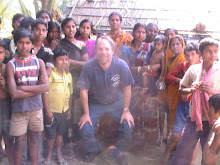
district of Dinajpur, I recently visited a remote village of 85 Hindu families,
cut off from the rest of Bangladesh in almost every way: no electricity, bad roads, not even a signal
for my cell phone. Some time before our
visit, more than 100 marauding Muslims attacked the village; moving from home
to home, taking some possessions and destroying the rest; from farm to farm stealing
livestock and destroying crops. They
torched the homes burning many to the ground; and they abused many of the women
(an all-too-common feature of these attacks).
By the time human rights attorney Rabindra Ghosh and I arrived, the
villagers had largely rebuilt, but charred remnants were there, too. More chilling, the attackers are threatening
to return and finish the job if the people do not leave Bangladesh.
Those
attackers have no decency; and neither do the Bangladeshi officials, local and
national, who refuse to help the victims or prosecute the attackers and are
thereby complicit in the terror. Right
now, the only thing that stands in their way is four local Muslim
policemen. They told us that prior to
the attacks, no one ever came to the village but that since then, they get
there as frequently as possible, often multiple times daily, to let the
villagers’ tormenters know that they will have to get through them if they want
to renew the attacks. (Villagers
confirmed this.) They are doing this
largely on their own since, as they admit, the government is taking no action. They fear for the villagers, however, because
they know they cannot be there all the time.
In a country
where decisions by public servants are based on how much money they get for it,
these Muslim policemen represent the apogee of decency.
On
the other hand, two Hindu Members of Parliament (MPs) visited me, and I asked them
why neither they nor their 15 colleagues (by their count) have done a thing to
save their co-religionists or even raised their voice against it. I indicated Bangladeshi human rights lawyer
and tireless activist, Rabindra Ghosh, beside me and said he could provide them
with a fresh atrocity that they can read into the record at every session of
the Jatiya Sangsad. They could protest the non-repeal of the
Vested Property Act and introduce bills to rescind this economic engine of
ethnic cleansing until it is. I pointed
out that 17 MPs is a large bloc, and that the only thing preventing them from
acting was their personal greed and moral cowardice.
They
are not decent people, but the many young Bangladeshis I met—both Hindu and
Muslim—who are trying to fight for the safety of Hindus are. For their service to their country, the
Bangladeshi police and government—who are not decent—rewarded them with
beatings and arrests.
Then there is Bangladesh’s Home
Minister, Muhiuddin Khan Alamgir, particularly indecent because he is able to
do something to stop the atrocities but refuses to do so. On February 20, he and I had a rather acrimonious
argument when he insisted that the government was doing just fine, thank you,
in preventing attacks on Hindus. I
wondered how the people I met in that Dinajpur village would have responded. His most insistent reply was that he “saw the
enclaves of the Red Indians” in the United States and that “33 people were
killed in Connecticut.” He also “countered” with “union membership has declined
in the United States.” Whether he really
thought they have any relation to their government-aided ethnic cleansing of
Hindus in Bangladesh, or he was being cynical; the man has no decency. Finally, he did ask me to provide him with
evidence of any atrocities and he would have them investigated; but I asked him
if he did not find it odd that he, the nation’s Home Minister sitting in its
capital, was dependent on “some guy from Chicago” for information about events
in Bangladesh.
Perhaps, however, the most indecent parties
of all are the internationally referenced and well-funded groups that claim the mantle of human rights
defenders but who have actively ignored what has become an open secret in South
Asia. In its 2012 “Human Rights Report”
on Bangladesh, Amnesty International did not even mention oppression of
Hindus. It claimed to have visited
Bangladesh three times that year but could not find a trace of what has become
an open secret that has been well-documented by organizations like the Hindu
American Foundation, Global Human Rights Defence, and Bangladesh Minority Watch
for years.
Amnesty International; Human Rights Watch; the UN
with its misnomered human rights commission; the finger-wagging European Union,
CNN, Reuters, the BBC, New York Times, Times of India, Times of London,
the left-wing media, the right-wing media, and pretty much every other major
“media”: indecent for their willful
ignorance of the ethnic cleansing of Hindus in Bangladesh and of those
Islamists and appeasers that are guilty of doing it.
So
let’s add it up. Muslim police, Muslim
and Hindu youth activists, activists like Rabindra Ghosh; decent. Hindu MPs, Muslim attackers, Muslim cleric
and political leaders, big name human rights organizations and media, and the
Bangladeshi Home Minister; indecent. The
ledger seems tilted against decency right now, and it seems the only hope
Bangladesh’s Hindus have is for decent people to change that.
Labels: A Quiet Case of Ethnic Cleaning, Amnesty International, Awami League, Bangladesh, Bangladeshi Hindus, Dinajpur, human rights, Hyderabad, Muhiuddin Khan Alamgir, Rabindra Ghosh, Richard Benkin