Tuesday, July 31, 2012

Dr. Subramanian Swamy: A Man to Emulate

The day that Dr. Subramanian Swamy left the United States, Gallop published a poll in which the American people said that ending corruption in government was their second most important issue after the economy and job creation.  Someone should have asked him to stay.  South Asia has long been known as a place where government corruption is so endemic, so tolerated that people just have to accept it.  I've personally confirmed massive corruption on India's eastern frontier, extending to all levels of government and having tentacles that reach into almost every area of life in the region.  In one investigation, we found we even found a position at virtually every police station, Dak Master, in charge of collecting graft.  People might remember when Pakistan had a prime minister nicknamed "Mr. Ten Percent" because of the kickbacks he demanded and received.  Or how President Barack Obama was laughed at when he told Afghan President Hamid Karzai that he had to end corruption in his country.

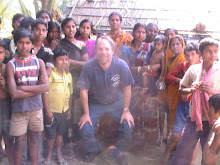
So it had to come as a shock when I arrived in India a couple years ago and found the country awash in open outrage about corruption, media attention about it, and legal cases against corrupt officials.  And it was all leading to successful actions.  What could possibly be behind such a sea change that no one thought possible a mere weeks earlier?  It is 72 year old, former cabinet minister Dr. Subramanian Swamy.  Known to many Indians as a "one man army," Dr. Swamy has never shrunk before a challenged or worried what others might think of him.  "I don't care," he kept repeating to me and others recently outside of Chicago when asked about the reactions of people from Harvard academics to India's strong-woman Sonia Gandhi.

Subramanian Swamy, a Harvard educated economist, has a long list of accomplishments that run from furthering relations between India and China to helping to revamp trade relations between developed and developing nations.  Although Swamy is known for his forthright and unequivocal positions on fighting the continued terror war against India and Islamist terrorism, few people remember that he went on a fast for more than a week in 1987 when Muslim youths were killed in police custody and eventually prosecuted the matter in court.

But in 2008, Swamy's attention turned to overcoming perhaps the nation's most formidable obstacle when he publicly took on corruption.  He filed petition after petition against high officials--having many ignored by the current Congress government--but refused to stop and eventually secured indictments against high officials.  He continues to pursue corruption cases against some of India's most powerful political individuals.

Swamy is able to do this not only because of his skills and intelligence (his is one of the most incisive minds I have ever encountered) but also because he refuses to back down from principle merely because of what others might think.  It is a rare quality among public figures (and is probably one reason why Swamy, though an influential politician, has steered clear of joining either of India's major parties).  It was also on view for two nights outside of Chicago last week.

Swamy was here to energize Hindus and strengthen their ties to their religious and cultural heritage--another issue which many people might despair of taking on.  But under Subramanian Swamy, it seems to be working.  Perhaps most impressive was the fact that Hindu youth (and I saw the same phenomenon in India) flocked to the septuagenarian and expressed tremendous admiration for his personal integrity and strength.

Let's see:  relations between the world's two largest nations; the system of international trade; corruption in South Asia; and strengthening Hindu heritage and intensity world wide.  What's next for this remarkable individual, stopping terror?

Perhaps as he is an outspoken leader in that effort despite threats and more.  And along those lines, in February this year, Dr. Swamy cut short a trip to Sri Lanka and flew back to New Delhi specially to be the principle speaker of my book launch.  The book, A Quiet Case of Ethnic Cleansing: The Murder of Bangladesh's Hindus, documents the ongoing destruction of the Hindu community Bangladesh and the world's tacit approval of it through its silence and inaction.  It also makes the case for understanding this human rights travesty and moral failure on our part as an integral element in the spread of radical Islam.  Dr. Swamy has since complimented the book and me many times, and I appreciate his endorsement.  The book is available online for US, Indian, and other readers.

Labels: , , , ,

Monday, April 30, 2012

American Hindus in 2012

Earlier this spring, anti-Hindu riots raged in Bangladesh’s Satkhira District after a local newspaper published an article alleging that “indecent remarks” were made about the Prophet Mohammad during a play at the local high school. A few days later, area Muslims exited their Friday prayers whipped into a violent frenzy over the allegations and attacked the Hindu community for two successive days. Dozens of homes were razed or looted; belongings of entire families destroyed; and there was at least one sexual assault reported. Hundreds of university students took to the streets in the nation’s capital to protest the riots, tying up traffic and bringing large sections of Dhaka to a standstill. And although the article that incited the riots was proven to be false (in fact, the paper’s charter to publish was summarily revoked as a result), the school’s headmaster and assistant headmaster were arrested on charges of “blasphemy.”

How many of you read about these events your morning newspaper; events of major import in the world’s third largest Muslim-majority country? Was it in the New York Times, Washington Post, Chicago Tribune, USA Today; or for that matter, Times of India? What about the cable news giants like the BBC, CNN, or Fox News? Did they report it? The news blackout by the media should surprise no one. Deliberate, government-tolerated attacks on Hindus like these—and worse—have been a regular feature of Bangladeshi life since long before the nation’s official birth. They have brought the once-robust Hindu community from almost a third of the population to less than eight percent. Yet, it was only last year that a lone US Congressman, Robert Dold of Illinois, raised the issue from the floor of the US House; and there still is no mention of Bangladesh’s Hindus in any of the world’s major media, or from those who claim the mantle of human rights, such as Amnesty International, Human Rights Watch, or the UN Human Rights Council.

People have explained this and related phenomena to anti-Hindu bias, pro-Muslim bias, petro-dollars, fear, and more. I would also add the fact that the deliberate elimination of non-Muslims in places like Saudi Arabia and Iran fit politically correct philosophies that insist ad nauseum that the problems of Islamic extremism are limited to, well, Islamic extremists. Identifying that sort of thing in retrograde states like Saudi Arabia does not upset their comfortable theories. But when it occurs in an institutionalized way in a “moderate Muslim nation”like Bangladesh, it does.

Dr. Subramanian Swamy puts a lot of the blame, however, on the “Hindu mindset,” that he says is not oriented towards conflict in the same way as other religio-ethnic groups are. His insight is shared by the vast majority of Hindus with whom I work. Thus, it is no surprise that when I travel both home and abroad to speak about the ethnic cleansing of Bangladesh’s Hindus, many Hindus claim to not to know anything about their brethren’s persecution; even though the Hindu American Foundation (HAF) has been publishing information about Bangladesh’s persecution of Hindus for years, usually right in the front of its annual human rights survey. Others admit to knowing about anti-Hindu persecution in Bangladesh, but have done little or nothing to stop it. For Hindus in the United States, the hotly contested election year of 2012 offers an opportunity to change that.

Shalabh Kumar, founder of the National Indian American Coalition (NIAC), has noted that the American Hindu community is around half the size of the American Jewish community, but you would never know it given the extent to which Jewish community concerns are considered by the media and public officials compared to those of the Hindu community. Nor would one know that there are only about a million more Muslims in the United States than Hindus by the way media and elected officials react to Muslim organizations like the Congress on American-Islamic Relations (CAIR) compared to the HAF. In neither case are Jews or Muslims the problem; they are only doing what every American community and interest group has a right to do: organize and advocate for the interests of their constituents.

We got a small taste of that potential in 2010. A group of us in the Chicago area contacted several Congressional and one Senatorial candidate who had a history of support for the Hindu community. None of us claimed the ability to deliver any particular number of votes, but we did make known to them some of the issues that were on the minds of several community members. While no one would allege that we were the difference between victory and defeat, our efforts did help launch more extensive relationships that enable us to make sure officials are aware of some of these matters.

The atrocities being perpetrated against Hindus in Bangladesh are the perfect issue around which such efforts can be organized. Ours is a country that sent troops into Bosnia when 10,000 people were victims of ethnic cleansing; there are more than 100 times that many Hindus facing ethnic cleansing in Bangladesh. The issue is not political but moral. It is not something that appeals to either Democrats or Republicans, but to both. It is a matter of right and wrong, and if Mandirs take a leading role in organizing to save lives, the pristine nature of our cause will be even clearer. Does it work?

Anyone who was around in the 1970s and 1980s will recall that it was impossible to pass a synagogue without seeing a large banner reading “Free Soviet Jewry.” Our people were being oppressed in the Soviet Union, and the American Jewish community recognized its obligation to do something about it; and our religious institutions were the focus. Religious school children were taught about it and given pen pals—Jewish children in the USSR whom they came to see as brothers and sisters, kids just like them. When children had their Bar and Bat Mitzvah, the synagogue would “twin” them with similar aged kids in the USSR—who did not have the freedom to celebrate their own. Average people whom you might see at the water cooler or in the supermarket, went on trips to Russia and smuggled in religious books and artifacts. The American Jewish Committee and other Jewish groups took a lead role in making sure our elected officials did not ignore us; and before it was all over, we got 1.2 million Jews out of that Gulag.

Let the Bangladeshi Hindus be your Soviet Jews!

Labels: , , , , , , , ,

Sunday, March 04, 2012

High Praise for book about Hindus in Bangladesh

I recently returned to the United States from an incredibly successful trip to India where I picked up endorsements for his work from the likes of Dr. Subramanian Swamy, Gujarat Chief Minister Narendra Modi, and Sri Sri Ravi Shankar, among others. Since 2007, I have been trying to stop the deliberate program of ethnic cleansing that has reduced the Hindu population in Bangladesh from almost a third in 1951 to about seven percent today. Professor Sachi Dastidar of the State University of New York calculates that about 49 million Hindus are missing from the Bangladeshi census. Now, I ask you, how do 49 million people go missing and nobody notices? Worse, how do 49 million people go missing and nobody cares?

Despite the fact that reports of anti-Hindu atrocities continue to pour out of Bangladesh almost every day, people still ask for ”evidence” when you bring it up to them. They often ask why if things are so bad, we never hear anything about it from Hindus or the government of India. We can pose any number of reasons for that, but I believe that one is the fact that Bangladesh is referred to as a “moderate” Muslim nation; and while the talking heads in various capitals and NGOs love to distinguish between “radical” Muslim nations, like Iran, and moderate Muslim nations like Bangladesh, the ethnic cleansing of Hindus by the latter spoils their naïve theorizing.


My new book, A Quiet Case of Ethnic Cleansing: the Murder of Bangladesh’s Hindus provides the evidence that prevents people like that from continuing that fantasy. The incidents are based it on first-hand observation and testimony, extensive research, and a network of informants and associates who have been able to verify so many of the anti-Hindu atrocities that have been reported over the past three years; the book is a stinging indictment of successive Bangladeshi governments and those entities that pose as human rights defenders and should be protecting these Hindu victims.

While the book provides the historical, legal, and religious underpinning of these atrocities, it also focuses on current events and in particular the complicity of Sheikh Hasina and Bangladesh’s current Awami League government. All the pundits and so-called experts who hailed her election as as something of a watershed that would “change everything” in Bangladesh have been proven wrong—and for too many Hindu victims, dead wrong.

In India, A Quiet Case of Ethnic Cleansing received rave reviews from several prominent individuals as well as academics, religious figures, and others. Dr. Subramanian Swamy cut short a trip to Sri Lanka in order to fly to New Delhi and be the principle speaker at its book launch. He praised my work and tied the events in Bangladesh to “larger issues” facing Hindus and others. Gujarat Chief Minister Narendra Modi was visibly moved by the events in the book and told me unequivocally that “I will work with you.” And K P S Gill, hailed by most as a hero for fighting such things his entire life and known as the man who saved Punjab, said that my book is an important one that should be “read carefully.”

A Quiet Case of Ethnic Cleansing: the Murder of Bangladesh’s Hindus is available for US shipping by clicking here and for addresses in India by emailing the publisher; people elsewhere, please email the author.

Labels: , , , , , , , ,