Friday, November 07, 2014

Is West Bengal Government Preparing an anti-Hindu Action?

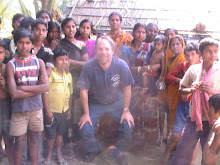
Earlier this year, I was at a Mandir in the rural Burdwan District of West Bengal.  Most of the people with me were there because of my work to stop anti-Hindu persecution in Bangladesh.  One man, however, was there to keep an eye on us.  He was part of West Bengal's ruling party, the Trinamool Congress (TMC), led with an iron fist by strongwoman Mamata Banerjee.  I confronted him about why the West Bengal government turns a blind eye toward anti-Hindu persecution in the state and the illegal infiltration from Bangladesh that has pushed Hindus out of several key border areas.  He admitted that both were problems but said that if they raised the issue "certain parties" would object strenuously.  "So what," I replied.  "Isn't it more important to stop the persecution?"  Yes, he said, but they needed those "certain parties" (i.e., code for Muslims) as the party's vote bank.

Fast forward to the landslide victory by Indian Prime Minister Narendra Modi and his Bharatiya Janata Party (BJP).  A key element to that win was a rejuvenation of Hindu pride after years of a government that demonized it as bigoted. During the campaign, Mamata was one of only a few Indian politicians who said that she would never join hands with Modi, and she has maintained that attitude ever since.  Moreover, while the TMC maintained its control in West Bengal, the pro-Modi vote made some serious--and heretofore absent--inroads.  Are recent events in the state part of a TMC/Mamata effort to shore up its base through action against Hindu activists?

On October 27, an associate of mine, Apurba Roy, was seized by West Bengal police along with his brother Nitish, at first on a manufactured charge of weapons possession.  After the authorities failed to comply with the law to produce the accused within 24 hours along with a charge, international pressure forced their hand.  Only the charge had changed to "illegal infiltration."  You see, Roy was a refugee from anti-Hindu persecution in Bangladesh, and had fled to West Bengal at some point in or prior to 2008.  Prime Minister Modi stated categorically that such refugees would be welcome in India.  Mamata's minions, however, would have no part of that and have begun rounding up people like Roy--while continuing to allow Muslims to cross from Bangladesh, increasing their current political strength.

Colleagues on the ground told me that while in custody, Roy faced severe questioning about his activities and those of my colleagues and me.  Other Hindu activists have been arrested recently, including Hindu Samhati founder and prominent Hindu leader, Tapan Ghosh (although he has been released at least for now).  It would not be out of keeping for the West Bengal rulers to harass pro-Hindu activists, including those like Roy and me who are only trying to stop the ethnic cleansing of Hindus in Bangladesh.  We will know more later this month when, according to the most recent filings, the government will hold its first hearing on Apurba Roy's case in a Bangaon courtroom.

Will this herald a TMC action to purge the state of its opponents?  A lot of people will be watching for the answer.

Labels: , , , , , , , , , , ,

Sunday, April 03, 2011

An End to a Hindu India?

Jihad has come to India. The Obama administration and the State Department will tell you that it is nothing more than isolated acts by individuals and the New Delhi government will say you are stirring up anti-Muslim sentiment. But I have seen it for myself first-hand and know that this studied denial will find us caught as flat-footed in India as we were in Lebanon, Egypt, Libya, and elsewhere. The difference is that India is an economic and military giant, with nuclear weapons and could be a cornerstone of any effective fight against radical Islam.

I have spent several years along India's 2545 mile-long frontier with Bangladesh, and have seen the impact Bangladesh's radicalization has had on its giant neighbor to the west. Amitabh Tripathi, who has been fighting against what he calls his country's "soft policies," noted that Bangladesh's Muslims "are not radicalized but their institutions are." Mixed with corruption on both sides of the border, that radicalization has produced demographic change in many strategic areas of India and given Muslim activists carte blanche throughout the country.
Each year in states like Uttar Dinajpur and West Bengal directly across from the Islamic state, we find that increasingly more mixed Hindu-Muslim villages are now all Muslim or Muslim-dominated. Gone are the roadside temples characteristic of places where Hindus practice their faith openly; gone are the sights of Hindu women dressed in their colorful saris and other vestments. They have been replaced by mosques and burqas. Last year, Tripathi and I met with Bimal Praminik, Director of the Kolkata-based Centre for Research in Indo-Bangladesh Relations who has studied these population changes and is convinced they are integral to the jihad's that threatens us all, noting that the dominant culture for South Asian Muslims has become more "Arabic," than South Asian.

Hindus in Pakistan and Bangladesh have been disappearing for years; now we are seeing Hindus being replaced by radicalized Muslims all in India. Between 1981 and 1991, Muslim population growth in West Bengal actually exceeded its growth in Bangladesh. India’s Muslim population growth outstripped government predictions based on demographic factors (fertility and mortality). There had to be another element driving the change, which Pramanik and others identify as "illegal immigration from across the border."

Statistics might be the "smoking gun," but jihad's impact is more powerful in the testimony of its victims. In places as far afield as Deganga and Meerut, Hindu populations are fleeing Muslim violence and government inaction. Elsewhere, an elderly Hindu in the Howrah district told us how Muslims are taking over her property piece by piece. She even showed us a wall with a star and crescent on it that local Muslims built to identify it as dar al Islam. In another village, residents showed us the remains of a Hindu temple that Muslims recently destroyed after urinating on its holy objects. Most poignant was the testimony of a crestfallen mother in Norit whose 22-year-old daughter was abducted weeks ago by local Muslims. Abduction of Hindu women and girls in the name of Islam has been common in Bangladesh for years and is a key element in jihad: eliminating females of childbearing years from the gene pool and forcing them to "produce" Muslim offspring instead. It is now happening in India, according to victimized parents who told me about it in India's North and Northeast.

Our State Department will tell you that there is no jihad in India. They will hew the official line that the liberal Awami League government in Bangladesh has put an end to anti-Hindu actions there. A similarly weak government in New Delhi will parrot the same platitudes. Yet, their false palliatives bring no comfort to the scores of victims who have told us their stories; or the many others now unable to do so. Imagine what an Islamist India would mean.

Labels: , , , , ,

Wednesday, December 01, 2010

Assam Government to Deport Victims of Islamist Terror

For several years, I have been traveling around West Bengal, India, in an effort to gather evidence about the plight of Bangladeshi Hindus and bring that evidence to human rights supporters in the United States Congress and Senate. The Bangladeshi Hindu population has fallen from just under a fifth of the Bangladeshi people at independence in 1971, to eight percent or less today. Contrary to apologists, there has been no corresponding increase in the Hindu share of West Bengal--the Indian state that borders Bangladesh and shares its ethnicity. In fact, the Hindu proportion of West Bengal has fallen during that time as well.

While we receive a steady stream of reported atrocities against Hindus in Bangladesh (reports which we investigate and almost always verify) and West Bengal; we are now receiving new reports from the neighboring Indian state of Assam, which stretches along Bangladesh's northern border. For years, and especially during times of unrest in Bangladesh, Hindus have fled to Assam for safe haven. In fact, the Assam Supreme Court has issued rulings of special protection for them.

Now, however, the Assamese government has begun issuing orders of eviction to many of these Hindus, all victims of Islamist (and Islamist fellow travelers) atrocity. It is doing this contemptuously of the longstanding supreme court rulings. It has not, by the way, issued any such orders to the growing number of Muslims now in the state. These infiltrators are attempting to replicate the same demographic shift in Assam as we are seeing in West Bengal.

Several local groups are forming to stop this double victimization. One of them, The Protection Forum for Bengali Hindus of Assam, has asked us to join them in this fight; and we will be standing with them in a matter of months. Some have also appealed to the national Indian government and Prime Minister Manmohan Singh. But it is clear that the only thing with a chance of stopping this is the pressure that comes from shining a light on these actions and forcing the world to confront what is happening to these perpetually victimized people before it is too late.

That has become one of our goals, and it is a major aim of our next trip to the region. If you want to help, contact Dr. Richard Benkin at drrbenkin@comcast.net.

Labels: , , , , , , ,

Thursday, July 01, 2010

Islamization of Northeast India no Coincidence

On February 15, 2010, I sat in a cab while it made its way through a traffic-clogged Kolkata to the office of Bimal Pramanik director of the Kolkata-based Centre for Research in Indo-Bangladesh Relations. Pramanik expressed serious concerns about the decades-long pattern of demographic changes in West Bengal (and Assam), and we discussed the context in which we can better understand them. Amitabh Tripathi, founder of the South Asia forum and a tireless activist in the fight against radical Islam, arranged the meeting and was a key participant in it.

Pramanik in Bangladesh’s 1971 War of Independence and is familiar with traditional Bengali Hindus and Muslims relations and how much they have changed in recent decades. While “Muslim infiltration” and demographic change itself is an issue, Primanik is more concerned about the deliberate nature of that change. He called it “Bangladeshi infiltration with Pakistani ideas,” and that the key element to the conflict is that South Asian Muslims are abandoning their traditional culture for “Arabic” dominated culture. Tripathi also noted the growth of Wahabi influence in Bangladesh, something that our colleague Salah Uddin Shoaib Choudhury also has documented.

In 1905 then again in 1947, Bengal was divided into a Muslim-majority entities (Bangladesh, previously East Bengal and East Pakistan) and a Hindu-majority entity (West Bengal state within India). In the second half of the twentieth century, however, the Muslim proportion of West Bengal’s population rose by 25 percent and its Hindu population declined by almost nine. In the same period, the proportion of East Bengal’s Hindu population declined by almost three-fourths, its Muslim share rose by more than one-third. Those significant shifts do not happen as a result of natural demographic processes, and the trends have continued into the 21st century. Pramanik noted that while Muslim population growth in West Bengal was nearly 35 percent between 1981 and 1991, it was only 25 percent in the same period in Bangladesh. “How can there be such a wide difference in growth rates between the two countries?” He asks. “This can only be explained by the illegal immigration from across the border.”

The South Asia Research Society conducted an exhaustive demographic study of population trends in West Bengal since 1941 and found that before 1971, almost all East Bengali refugees in West Bengal were minorities. Since then, “there has been largescale voluntary infiltration” of Bangladeshi Muslims “as well as the forced migration” of minorities, mostly Hindu.

Pramanik’s own study of Bengal population changes examined changes that occurred between 1951 (after the major share of population transfers from 1947 had been completed) and 2001. The intervening 50 years saw the rise of radical Islam as a major international player and so also several decades of efforts by radical Muslims to implement their designs. Differential growth rates between Hindus and Muslims in Bengal are startling. In Bangladesh, the Hindu population grew from about nine to eleven million, or 23.16 percent; while the Muslim population grew from 32 to 111 million, or 244.68 percent. Apologists have attempted to dismiss this disparity as free decisions by Hindus for economic reasons, but decisions were not free and even if for economic reasons they were due to anti-Hindu actions: seizure of assets under the Vested Property Act, religious discrimination, persecution, and so forth. And if it was simple population transfer, population figures for the Indian state closest to Bangladesh with the same ethnic group would reflect that. So what do we see? West Bengal had about 19 million Hindus in 1951 and 58 million in 2001, an increase of 198.54 percent. Its 1951 Muslim population of approximately five million Muslims grew to more than 20 million in 2001 or by 310.13 percent. Muslim growth rate exceeded that of Hindus in all but one district. Primanik documented a situation of “unabated infiltration,” especially during the final two decades of his study and a pattern of increased crime in these districts as the Muslim infiltration became more prominent. His findings help quantify frequent testimony by Bangladeshi Hindu refugees of increased attacks on their ersatz colonies by combined forces of Bangladeshis and Muslim villages from the surrounding areas; and my own observation of formerly mixed Hindu-Muslim villages now almost all Muslim and the disappearance or abandonment of the once ubiquitous roadside Mandirs or Hindu temples.

The prolific Primanik suggest what awaits Hindus in West Bengal, as well as the darker motivations behind the phenomena noted in this book. “This continuous infiltration from across the border is slowly and steadily changing the demographic pattern in the border areas, especially in the States of West Bengal and Assam… which is threatening our secular polity and national security. This is a religio-cultural process taking place in a geographical space considered to be strategically important. Thus, the emergence of Bangladesh has created in the North-Eastern States of India certain conditions conducive to Islamisation.”

Labels: , , , , ,

Monday, August 31, 2009

New Wild West? Rustling Cattle to fund Jihad

It is a story most Americans have heard time and again: "bad guys" in the Old West stealing cattle from law-abiding citizens. It was a very lucrative business back then but one that was hated by the people of the Old West. No doubt, we assumed it was a thing of the past and that cattle rustlers posed no threat to us--we urbanized and urbane Americans. Well, we had better think again.

Interfaith Strength first learned in March that Bengali Muslims were using the proceeds from stolen cattle to fund jihad in South Asia. During a clandestine and late-night meeting in Kolkata, individuals with homes in the border area between India and Bangladesh told me that "after ten o'clock you can see everything." By everything, they meant cattle going out of India in exchange for arms and terrorists coming into the country. The jihadis were helped in this effort by corrupt officials from West Bengal, the Indian state that lies on Bangladesh's western border and has been under the iron first of communist rule for the past 30 years.

Interfaith Strength recently investigated the allegations and has been able to confirm the existence of this network that is funding anti-Indian and specifically anti-Hindu terrorism with proceeds gained from violating a sacred tenet of the Hindu faith.

We will have more on this in the coming days.

Labels: , , , , ,