Is this the year when the US exposes Bangladesh for what it is?
People who have any ground-up familiarity with Bangladesh find the notion of it as a "moderate" country laughable. It's an idea that springs forth from elites in the diplomatic corps, academia, the media, and leftists everywhere. It's not a notion that has any relation to what is actually happening there.
For decades, radical Islamists have taken over one social institution after another, including education, banking, even the law. Perhaps the most tragic irony of calling Bangladesh moderate, though, is how it receives the title while allowing or even participating in the systematic elimination of its non-Muslim minorities. My own focus is Bangladesh's Hindu community, which has fallen from almost a fifth of the population at Bangladesh's birth in 1971 to perhaps as few as one in 15 today. During that time, we have received ongoing reports of anti-Hindu atrocities including murder, rape and gang rape, child abduction, forced conversion, religious desecration, land seizures, and more. But minorities face attacks in many nations. The situation in Bangladesh becomes a human rights atrocity that deserves international intervention because Bangladeshi governments regardless of party have refused to prosecute all but a few cases; they have enabled it and still do.
Those who believed the current, Awami League government would be different were wrong. During its first term in office, major anti-Hindu atrocities occurred at or over an average of one per week. There were especially horrendous periods, such as a nine-day span May 2012 that included a murder in broad daylight, a child abduction, and two rapes (one of a child on her way to a Hindu religious festival). While my tabulation is not final yet, the situation in 2013 and so far in 2014 appears no better. Not only has the government refused to help retrieving abducted women and children; in many cases, its officials participated in the crimes.
These are only the crimes I verified myself; many more were reported, which my limited resources did not let me investigate. All of them were confirmed by at least independent witnesses, occurred under the Awami League government, were not prosecuted, and were targeted specifically against Hindus and Hinduism.
Organizations like the Hindu American Foundation have been publicizing Bangladesh's ill-treatment of Hindus for years. Bangladeshi human rights giant, Rabindra Ghosh, has been investigating and documenting it for at least that long. Yet, people who can do something about it seem to want to hold on to their fairy tale about a moderate Bangladesh, truth be damned. Until now. I am currently involved in initiatives in multiple international capitals that would restrict Bangladesh’s ability to sell its exports, provide UN peacekeeping troops, and otherwise maintain its current economy as long as it is the economic engine that drives the ethnic cleansing of Hindus and other minorities.
The US House Foreign Affairs Committee (one of the most powerful) and its Chairman Congressman Ed Royce have been working with me to hold hearings this year on Bangladesh's ethnic cleansing of Hindus.
Mount Prospect, Illinois (just outside of Chicago) recently became the first US city to issue a formal proclamation recognizing Bangladesh's ethnic cleansing of Hindus; we expect more localities to follow, and expect them to be the basis for action depriving Bangladesh of the income it uses to maintain its persecution of minorities.
Bi-partisan representatives of Members of the US Congress have let the US Commission on International Religious Freedom know that they can no longer give Bangladesh a pass on its human rights violations because it threw off military rule over six years ago.
At least three major NGOs have asked me to work with them on the issue of Bangladesh's Hindus.
And just this week, some Congressional aides asked if they could help me get the matter before the US House's human rights commission.
Bangladesh depends on the tacit complicity of other by way of their silence. Once the matter is out in the open, companies that currently purchase their goods will not want to be associated with ethnic cleansing; the UN would not have peacekeepers who cannot even keep the peace within their own borders; and the Awami League government will actually have to do something rather than mouth empty platitudes. Stay tuned because we expect a lot to happen in the near future to change this debate forever.
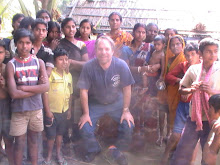
Post Script: In a recent human rights mission, I saw first hand that Bangladesh has been exporting its anti-Hindu jihad across the border to West Bengal and Assam states in India. Its large scale infiltration is also causing an environmental disaster in Assam that we expect to address this year as well. My advice to Bangladesh's leaders: take action before others force action upon you; and recognize that once you lose those international markets, others will step into the void and you will never re-gain your previous position if you later decide to do the right thing. Just do it now.
Labels: Assam, Awami League, Bangladesh, Bangladeshi Hindus, Ed Royce, Hindu American Foudation, jihad, Mount Prospect, Muslim infiltration, Rabindra Ghosh, Richard Benkin
posted by Dr. Richard Benkin at
11:27 PM
|
1 Comments